
Company: WurkNow, Inc
Role: UX/UI Designer & Frontend Development
Tools: Figma, Design System, Prototyping, Angular
Collaboration: Product Owner, Development Team
Project Overview
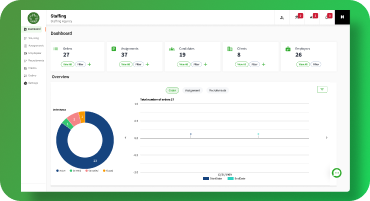
The Staffing Software was designed to help staffing agencies onboard candidates and get them to work faster than ever.
My role covered the entire spectrum of product design — from branding and UI design to frontend development.The goal was to create a scalable, consistent, and modern platform that streamlined candidate onboarding and job placements for recruiters and HR professionals.
Problem
The company needed a new digital product to simplify the hiring process and accelerate onboarding timelines. However, several challenges emerged during development:
- The product requirements evolved as new features were being built.
- The UI had to remain consistent even as screens were added or changed mid-development.
- There was no existing branding or visual identity for the product.
This required flexible design thinking, tight collaboration, and careful attention to UI scalability.
Goals
The company needed a new digital product to simplify the hiring process and accelerate onboarding timelines. However, several challenges emerged during development:
- Develop a strong product identity — including logo and branding.
- Design a user-friendly interface for recruiters and candidates.
- Ensure UI consistency across all modules during ongoing development.
- Collaborate with developers to maintain design integrity in Angular.
Branding & Identity
Before diving into product screens, I created a logo and visual identity to establish a recognizable and professional brand.
- Logo Design: Created a clean, minimal mark representing connection and workflow.
- Color Palette: Selected modern, approachable colors to build trust and reflect speed and efficiency.
- Typography & Components: Defined type hierarchy and spacing rules for readability and scalability.
This branding system became the foundation for all UI components and interactions.
Design Process
Impact
- Enabled recruiters to onboard candidates faster, improving workflow efficiency.
- Delivered a cohesive, brand-aligned experience across the platform.
- Strengthened collaboration between design and development, reducing iteration time.
- Established a flexible design system for ongoing product growth.
Key Takeaways
This project strengthened my ability to design and build at the same time, adapting to changing requirements without compromising on consistency.
By combining design thinking with front-end development, I created a scalable, branded, and user-centered staffing platform that meets both business and user needs.